Services
Consulting
Services
Consulting Services
Types of consulting services:
For Therapists: Creative strategy for making the work sustainable, effective, and healing for the helper
For Church Leaders: Religious trauma recovery for individuals and groups, storytelling circles for spiritual healing
For Communities of Care: Trauma recovery and self-EMDR, storytelling circles for connection and healing
For Everybody: Self-EMDR for trauma recovery, memoir writing and creative strategies for healing and community building, storytelling circles
FOR THERAPISTS
“I support therapists in developing creative practices that can grow and sustain them over time.”
My work with therapists and helping professionals is best understood as mentoring—and more. Those of us who work with trauma every day need practices that sustain and energize us, not just our clients. Through reflective consultation and creative exploration, I help clinicians develop ways of working that feel both empirically grounded and genuinely their own—so methods, language, and presence remain alive rather than rigid.
This work aligns closely with the spirit of ReConceive podcast: an invitation to reimagine practice as something relational, creative, and inhabitable. We attend not only to interventions, but to the spaces in which healing happens. Offices matter. Light, color, texture, layout, and objects all communicate safety, authority, and invitation long before a word is spoken. Together, we explore how your physical space can become an extension of your clinical values rather than a neutral backdrop.
The goal is not to move away from evidence-based care, but to inhabit it fully—to allow empirically supported methods to become personal, embodied, and sustainable. This collaborative work supports clinicians in shaping practices that reflect who they are, how they work, and what they need in order to keep doing this work with depth, integrity, and vitality over time.
“This work gives language and form to something many clinicians are quietly longing for.”
FOR CHURCH LEADERS
Healthy spiritual development often requires tending to what people have carried silently for years. Many congregants arrive with unresolved fear, shame, or relational wounds shaped by earlier religious experiences—sometimes from within the same tradition, sometimes elsewhere. My work with church leaders supports the understanding that processing trauma is not a threat to faith, but often a prerequisite for deeper spiritual maturity. These gatherings offer frameworks and practices that help communities hold difficult emotional material with care, clarity, and containment—reducing polarization while increasing trust, connection, and resilience within the congregation.
Frequently Asked Questions
Is this about deconstruction or changing beliefs?
No. This work focuses on emotional and relational healing rather than belief revision. Participants are invited to explore how faith has been experienced in the body and nervous system—not what they should or should not believe.
Why include trauma-informed psychology in spiritual settings?
Because many spiritual struggles are rooted not in theology, but in unresolved fear, shame, or attachment injury. Addressing trauma supports spiritual growth by restoring emotional safety and relational trust.
Will this undermine church leadership?
On the contrary. When leaders understand how trauma impacts behavior, belief, and belonging, they are better equipped to foster stability, compassion, and healthy community dynamics.
Is this therapy?
No. These gatherings are educational and reflective, not clinical treatment. Clear boundaries are maintained, and participation is always voluntary and choice-based.
Why is trauma processing part of spiritual development?
Spiritual development often involves integrating earlier experiences that shaped how individuals relate to authority, belonging, and the sacred. When fear-based patterns are acknowledged and healed, faith can move toward greater depth, trust, and relational openness.
FOR COMMUNITIES OF CARE
Storytelling Circles
I facilitate storytelling circles that help communities engage difficult or pressing issues through attentive listening rather than debate. Rooted in the work of the Austin Story Project and shaped by trauma-informed, relational principles, these circles create structured spaces where lived experience is honored and connection can grow. Especially within churches, therapist groups, and other communities navigating change or tension, storytelling shifts the focus from persuasion to presence. When people are invited to speak and listen in this way, what feels polarized often becomes human—and communities rediscover their capacity for trust and belonging.
Storytelling Circles Are Especially Helpful When:
- A church or community is navigating change, transition, or leadership shifts
- Conversations around faith, identity, or belonging feel tense or polarized
- A group wants to address difficult issues without debate or persuasion
- Therapists, clergy, or other helping professionals are experiencing burnout, disconnection, or isolation
- A community is integrating grief, collective stress, or shared trauma
- Leaders sense that something important is unspoken—but aren’t sure how to surface it safely
- A group desires deeper connection but needs a structure for honest, respectful sharing
Members long to be heard as whole people rather than as positions or roles
FOR EVERYBODY
Self-EMDR for Trauma Recovery
All of us experience trauma but only some of us have access to a trauma therapist, trained in EMDR, who can guide us through the process of healing from our worst memories. Enter self-EMDR, and my book series, starting with The Art of Self-EMDR for Trauma Recovery. Originally, when Francine Shapiro began teaching therapists how to use her method, she wrote about self-help aspects of EMDR. This is where ordinary non-therapists can learn to focus bilateral stimulation on areas of stress and pain – and also use it to strengthen happy thoughts and feelings.
Consultation for self-EMDR is extra help for anyone working with my books: therapists (yes, even EMDR-trained therapists), parents, memoir writers (Book 2), coaches, group facilitators, and anyone who wants to feel better. It’s not therapy, but guidance to help you become more therapeutic in your work with others or yourself.
Self-EMDR for Trauma Recovery
Consultation: The Art of Self-EMDR
My consultation work, grounded in The Art of Self-EMDR for Trauma Recovery, supports therapists and helping professionals in integrating creative, attachment-informed EMDR practices into their clinical work. Rather than focusing only on protocol, this consultation explores how bilateral stimulation, imagery, and expressive methods can be used thoughtfully and ethically to deepen trauma processing while preserving client agency. Together, we examine case material, refine attunement, and consider how creative interventions can enhance regulation, memory integration, and relational repair. The emphasis is on helping clinicians inhabit EMDR as a flexible, embodied practice—one that remains empirically grounded while responsive to the complexity of real human experience.
Ideal for clinicians who:
- Want to integrate creative and expressive methods into EMDR work
- Are seeking a more attachment-informed, relationally attuned approach
- Work with religious or spiritual trauma and want additional conceptual support
- Feel confident with protocol but want their EMDR practice to feel more personal and embodied
- Are navigating complex trauma where regulation and pacing require nuance
- Desire reflective consultation rather than checklist-style supervision
- Understand that this consultation is informal and not EMDRIA-approved, and is intended for enrichment and clinical development rather than certification credit
Clinicians
I offer specialized consultation for clinicians working with clients navigating religious trauma, spiritual abuse, or complex faith transitions. This consultation integrates attachment theory, trauma-informed EMDR principles, and developmental perspectives on spiritual formation to help therapists understand how fear-based religious environments shape nervous system responses, relational patterns, and identity. Together, we explore pacing, language, and intervention choices that support processing without pathologizing faith itself. The focus is on helping clinicians hold both psychological depth and spiritual nuance—so clients can move toward integration, agency, and relational safety rather than polarization or shame.
Religious & Spiritual Trauma (Church + Recovery Friendly)
Common Themes We Explore
- Attachment patterns shaped by authoritarian or fear-based faith systems
- Scrupulosity, shame, and chronic threat responses linked to spiritual messaging
- Differentiating trauma responses from theological conviction
- Processing religiously infused memories using EMDR with appropriate pacing
- Grief related to faith transitions, community loss, or identity shifts
- Navigating anger toward spiritual authority without collapsing into self-blame
- Supporting clients who wish to remain spiritually engaged while healing
- Working with polarized family systems divided by belief change
- Developmental models of spiritual growth beyond certainty and compliance
- Language choices that honor both psychological insight and spiritual meaning
Clergy & Church Leaders
I offer consultation for clergy and church leaders seeking thoughtful, psychologically informed ways to support individuals and congregations shaped by difficult or fear-based religious experiences. Many spiritual struggles reflect not only questions of belief but also unresolved attachment wounds, shame, or chronic threat responses that influence how people relate to God, authority, and community. This consultation helps leaders recognize when trauma may be part of spiritual distress and develop responses that foster safety, connection, and genuine spiritual growth. The focus is not on changing theology, but on strengthening pastoral care—so congregations can become places where honesty, healing, and deeper faith are able to coexist.
Healthy spiritual development often requires tending to what people have carried silently for years. Many congregants arrive with unresolved fear, shame, or relational wounds shaped by earlier religious experiences—sometimes from within the same tradition, sometimes elsewhere. My work with church leaders supports the understanding that processing trauma is not a threat to faith, but often a prerequisite for deeper spiritual maturity.
When Faith Hurts
Healing spiritual wounds without losing your soul
Unlearning Fear-Based Faith
Toward a more relational spirituality
God, Anger, and the Body
Why spiritual maturity includes emotional honesty
After Certainty
Spiritual development as evolution process
Storytelling Circles for Community Healing & Development
Drawing on my facilitator training with the Austin Story Project and the work of Mark Yaconelli, I offer storytelling circles as a way for communities to engage meaningful and sometimes difficult aspects of their shared life through attentive listening and lived experience. Story circles create structured spaces where participants speak from personal experience rather than positions or arguments, allowing trust and understanding to grow in ways that discussion alone often cannot achieve. These circles are guided by clear relational agreements and trauma-informed practices that support both safety and authenticity, making it possible for communities to address important issues without pressure to persuade or resolve differences.
Storytelling circles can focus on any dimension of community life—belonging, change, leadership, loss, faith, identity, or shared history—and are especially meaningful in church and faith-based settings. For groups shaped by spiritual or religious trauma, storytelling offers a gentle way to restore voice and connection while honoring the complexity of people’s experiences. When stories are shared and received with care, communities often discover that what once felt isolating or divisive becomes more human and more workable. Story circles support not only healing, but also ongoing community development, helping groups grow in trust, emotional maturity, and relational depth.
Sample Story Circle Themes
Storytelling circles can be shaped around many aspects of shared life. Examples include:
- Moments when I felt a sense of belonging — or the absence of it
- A turning point in my spiritual journey
- A time when I felt truly listened to
- Experiences of change or transition in our community
- What first drew me here
- Moments when faith felt alive or meaningful
- A time when I learned something important about trust
- Stories of loss, resilience, or unexpected growth
- Times when I felt both doubt and hope at once
- What has sustained me during difficult seasons
- A person who shaped my understanding of faith or community
What it means to feel at home in a community
Especially Helpful for Groups Healing from Religious or Spiritual Trauma
Story circles can also gently explore themes such as:
- Moments when faith felt confusing or painful
- Finding my voice after silence
- Experiences of safety and unsafety in spiritual spaces
- Letting go and holding on in my spiritual life
- What healing has looked like for me
- Reclaiming parts of myself that were set aside
- Ways my understanding of God or spirituality has changed
What helps me feel spiritually grounded now
When the body speaks louder
In collaboration with Tracy Maxfield, I offer interdisciplinary co-therapy for individuals and couples navigating complex trauma, chronic stress or pain, movement problems, or persistent emotional patterns that feel “stuck.” This kind of co-therapy is especially helpful when emotional pain is primarily speaking through the body in symptoms like insomnia, limited mobility, or other physical discomfort.
While I focus on attachment, EMDR, and relational repair, Tracy tracks emotional experience through the body, working directly with pain, tension, and movement patterns. Drawing from Feldenkrais movement lessons, neuromuscular therapies, and Chinese medicine, he helps clients notice where fear, anger, or grief are physically organized—and how gentle shifts in awareness and movement can create new possibilities. Together, this integrated approach allows psychological processing and somatic regulation to unfold simultaneously, deepening safety and accelerating meaningful change.
Interdisciplinary Co-Therapy
What Clients Often Notice
Clients who participate in interdisciplinary co-therapy often describe:
- A deeper sense of calm and regulation, even when discussing difficult material
- Physical tension beginning to soften without forcing it
- Emotional patterns becoming clearer as body awareness increases
- Long-standing pain or stress feeling more understandable and less mysterious
- Greater capacity to stay present during conflict or vulnerability
- Insights that feel embodied—and bodies that feel less pain
- Movement from feeling “stuck” to experiencing subtle but meaningful shifts
- A sense of being supported from multiple angles at once
Many clients report that addressing both relational patterns and bodily organization simultaneously allows change to feel more integrated and sustainable over time. I notice that working in this way often makes EMDR therapy more effective.
Tracy Maxfield, NMT, SRA, NKT, P-DTR Certified
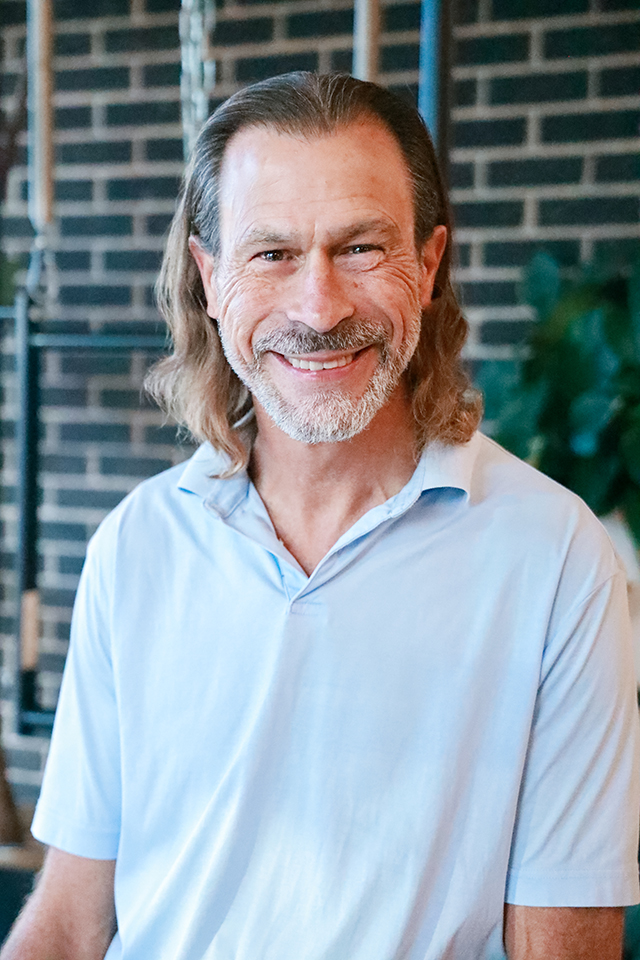
Tracy is a movement specialist. He earned a Master’s of Fine Art in Modern Dance from the University of North Carolina at Greensboro. He is a certified Pilates instructor, and Proprioceptive Deep Tendon Reflex and Spinal Reflex Therapy Practitioner. Most recently, he trained in the Anat Baniel Method of Neuromovement, which is based on the teachings of Moshe Feldenkrais. Tracy and Deborah co-host the Reconceive Podcast, a conversation for helping professionals. Tracy treats pain and movement dysfunction in athletes, dancers, and people who just want to feel and move better. Tracy says, “I learned through my practice that most of the physical, cognitive, and emotional problems my clients experienced could be resolved through movement.” Tracy focuses on improving coordination and energy flow through muscle testing and movement lessons, in order to make strengthening more effective and help his clients feel better. He often joins Deborah and other mental health therapists in co-therapy sessions to address complicated trauma. Body-focused methods amplify work with EMDR to improve client access to important emotional information that can be processed, allowing clients to release stress and restore calm. Tracy and Deborah are currently designing dance-based exercises for therapists to improve right-brain connection with their clients.